How to Find Quiet Community Spaces in Old Port Montreal When the Tourist Crowds Arrive

How Can Locals Escape the Tourist Rush in Old Port Montreal?
Here's something most visitors don't realize — nearly 12 million people pass through Old Port Montreal each year, yet only about 4,000 of us actually call this neighborhood home. That math creates a peculiar reality for residents. Our streets swell with visitors, our sidewalks bottleneck near Place Jacques-Cartier, and come summer weekends, grabbing a coffee on rue Saint-Paul can feel like navigating a festival crowd. But here's what we've learned after years of living here: Old Port Montreal hides dozens of pockets where the tourist buzz barely penetrates — spots that remain genuinely ours, if you know where to look.
This isn't about gatekeeping. It's about survival. When you live in a place that doubles as a national landmark, finding your own breathing room becomes a necessary skill. The good news? Old Port Montreal's geography works in our favor. Beyond the main drags — Saint-Paul, de la Commune, the waterfront promenade — the neighborhood compresses into a warren of narrow streets, hidden courtyards, and overlooked corners where locals gather, work, and recharge without the constant stream of visitors asking for directions to Notre-Dame Basilica.
Where Do Old Port Montreal Residents Actually Go for Peace and Quiet?
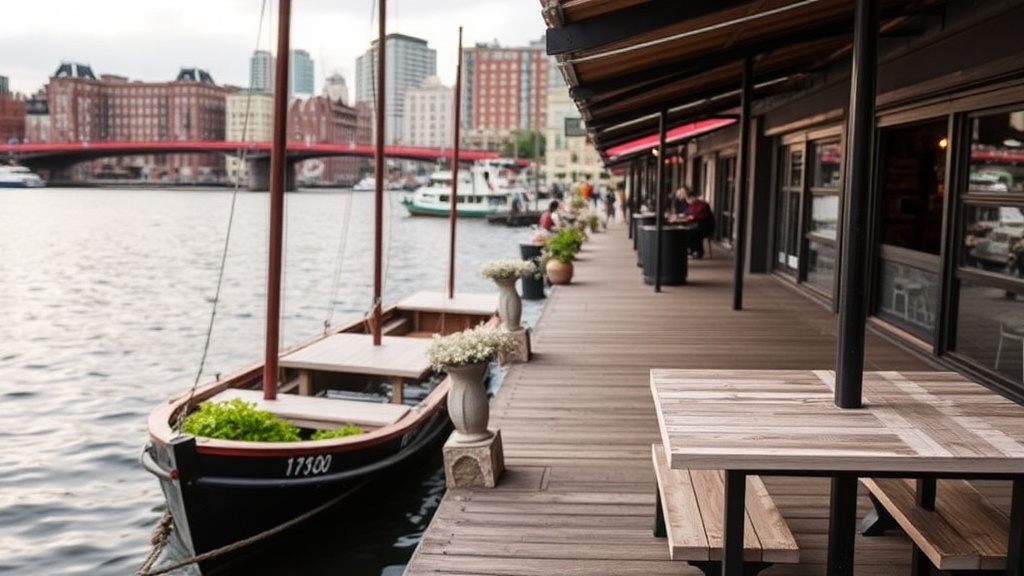
The waterfront — specifically the Old Port of Montreal itself — draws millions, but locals know the eastern stretches near the Cité du Havre remain surprisingly tranquil. While tourists cluster around the clock tower and Bonsecours Market, we head east past the Science Centre toward the quieter piers where the river laps against the docks and the city noise fades. This stretch — technically still Old Port Montreal — offers benches facing the water, shade from mature trees, and a view of the river that hasn't changed much in a century.
Champ de Mars presents another curious case. Tourists photograph the remaining fortification walls, snap their pictures, and move on. But the terraced green space behind those walls — the elevated walkways and shaded benches — remains underutilized by visitors. On weekday mornings, you'll find neighborhood residents reading newspapers, walking dogs, or simply sitting with coffee from Café Myriade (located just around the corner on rue Saint-Jean) while the morning light hits the old stone. It's public space that functions as a locals' living room.
The real secret weapon? Timing. Old Port Montreal operates on a predictable rhythm. Tourists tend to arrive mid-morning, peak around lunch, surge again for sunset photos, then filter toward dinner reservations. The hours between 7 and 9 AM belong almost exclusively to residents — dog walkers, early-shift workers, retirees. Similarly, after 9 PM, when the day-trippers retreat to their hotels, the neighborhood exhales. The same streets that felt impossibly crowded at 3 PM become yours again.
Which Local Spots in Old Port Montreal Still Feel Like Neighborhood Hangouts?
Finding a café where the staff knows your order requires some exploration — the high-traffic spots on Saint-Paul cater to visitors, and that's fine. But venture one or two streets north, toward rue Saint-Nicolas or rue Le Royer, and the character shifts. Crew Collective & Café (in the historic Royal Bank building) attracts some tourists, sure, but the morning crowd skews heavily toward Old Port Montreal professionals and remote workers who treat the grand hall as a shared office. The Wi-Fi works, the coffee's excellent, and the sheer scale of the space means you can always find a quiet corner.
For something more intimate, the stretch of rue de la Commune near the King Edward Quay offers several small establishments that primarily serve the residential buildings above them. These aren't destination restaurants — they're neighborhood joints where the regulars know each other. The same pattern repeats around Place d'Youville, where the residential density increases and the tourist foot traffic thins. Local residents gather at the outdoor rink in winter, use the library branch on rue de Bleury, and frequent the smaller dépanneurs that don't sell souvenir postcards.
The Bonsecours Market itself — often dismissed as purely tourist-oriented — actually houses several ateliers and studios where local artisans work. Visit on a weekday morning before the tour buses arrive, and you can have actual conversations with the makers. Many of them live in Old Port Montreal or nearby neighborhoods, and they represent a creative community that persists despite the commercial pressures of the tourism economy.
How Do Old Port Montreal Locals Build Community in a Tourist-Dense Area?
Living in a tourist destination creates a particular loneliness — you're surrounded by people, but none of them are staying. Old Port Montreal residents have developed informal systems for maintaining connection. The public markets — particularly the seasonal farmers market near the Old Port — function as community hubs where neighbors actually talk to each other. Unlike the permanent market buildings, these pop-up gatherings draw locals who live here year-round, people who need groceries, not souvenirs.
Neighborhood associations play an outsized role in Old Port Montreal. With such a small residential population relative to the tourist influx, organizing matters. Residents coordinate through social media groups, building-specific networks, and the occasional community meeting at the École du Petit-Voyageur or local community centers. These aren't just complaint forums about noise or congestion — they're how we share information about road closures (common, given the neighborhood's frequent film shoots), parking alternatives, and which streets are currently being repaved.
The seasonal rhythm helps too. Winter thins the crowds dramatically, and Old Port Montreal transforms. The Igloofest crowds are different from summer tourists — more local, more committed. The ice skating at the Old Port — yes, it's popular, but locals buy the season passes. We learn which patches of the frozen river path stay icy, which benches catch the afternoon sun, and which cafés have working fireplaces. The cold months become our reward for enduring the summer crush.
What Practical Strategies Help Old Port Montreal Residents Reclaim Their Neighborhood?
First: embrace the residential streets. While tourists stick to the main arteries, Old Port Montreal locals navigate through the smaller passages — rue Saint-Amable, rue du Saint-Sacrement, the various ruelles that cut between buildings. These routes take longer but bypass the congestion entirely. You learn which alleys connect where, which courtyards offer cut-throughs, and which building lobbies provide shelter during sudden rainstorms.
Second: support the businesses that support residents. Several establishments in Old Port Montreal explicitly cater to locals — they don't advertise in hotel lobbies, they don't translate their menus into four languages, they don't play the tourism game. These spots survive on neighborhood loyalty, and they reciprocate it. They remember your name. They hold packages for you. They function as the third spaces that sociologists keep telling us we've lost.
Third: participate in the civic life. Old Port Montreal faces genuine challenges — housing affordability, infrastructure strain, the tension between preservation and development. Showing up to borough council meetings, supporting heritage conservation efforts, and engaging with local representatives matters more here than in neighborhoods that don't face the same pressures. Our small population means individual voices carry weight.
Living in Old Port Montreal requires adaptation. You don't move here expecting a typical residential experience — the cruise ships, the festival crowds, the constant photography, that's the trade-off for living somewhere beautiful and historically significant. But the neighborhood rewards those who invest in it. The locals who've stayed for decades — and there are many, despite what you might assume — have carved out rich lives here. They know the doormen, the shopkeepers, the street musicians. They've witnessed the neighborhood's evolution from neglected port district to tourist magnet to (slowly, unevenly) something like a balanced community again.
The secret isn't finding hidden gems — though those exist. It's finding the patience to explore, the willingness to venture beyond the obvious routes, and the commitment to treating Old Port Montreal as home rather than backdrop. The tourists will keep coming. That's not changing. But the neighborhood belongs to those who stay.