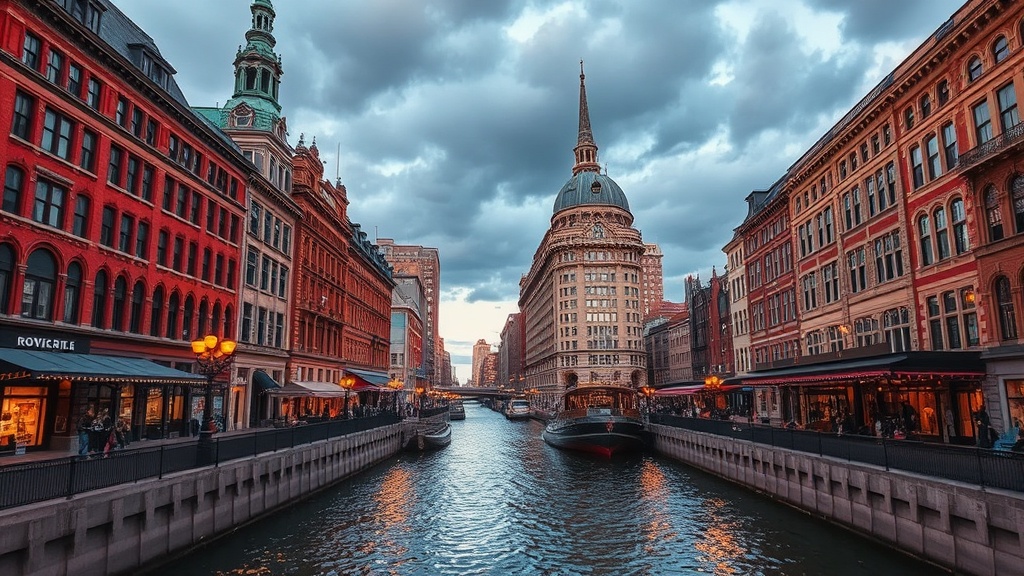
Beyond the Postcard: Decoding Old Port Montreal's Architectural Narratives

What Secrets Do Old Port's Historic Facades Hold?
Walk through Old Port Montreal on a crisp afternoon, past the bustling terraces and the vibrant activity along Rue de la Commune. It’s easy to get caught up in the present-day charm, the inviting storefronts, and the general buzz. But slow down for a moment, let your gaze drift upward, or peek into an unassuming alley. Suddenly, the very stones beneath your feet, and the ornate details on buildings that have stood for centuries, begin to tell a different story—a richer, deeper narrative of Montreal’s past.
This isn't about memorizing dates or names; it’s about learning to 'read' the city around you. Old Port isn't just a picturesque backdrop; it’s an open-air museum, its history etched into its architecture, patiently waiting for you to notice. From subtle clues about its mercantile origins to the enduring craftsmanship of early settlers, understanding these architectural narratives enriches every stroll. You'll never look at a familiar street the same way again once you start picking up on these silent, stone-cold historical whispers.
How Can You Discover Old Port's Forgotten Architectural Details?
To truly appreciate Old Port Montreal's architectural tapestry, you need to engage your senses beyond just sightseeing. It starts with observation. Notice the varying heights of buildings, the differing stone types, or the occasional gap in a streetscape—each hints at centuries of development, destruction, and preservation. For instance, many structures here feature distinct Quebec fieldstone, often roughly cut and laid, a testament to early construction techniques. As you move from areas closer to the river inland, you might spot more refined stonework or brick, reflecting later periods of prosperity and more advanced building methods.
Then there's the ironwork. Intricate wrought-iron balconies and grilles adorn many buildings, particularly around Place Jacques-Cartier and along Rue Saint-Paul. These aren't just decorative; they often reflect European influences, particularly French and British, and speak to the status of the building's original occupants. Look for the delicate floral motifs, geometric patterns, or even subtle family crests woven into the designs. These details are easy to miss if you’re moving too quickly, but they offer incredible glimpses into the aesthetic and cultural values of past generations.
Another fascinating detail lies in the building heights and rooflines. Unlike the uniform facades of newer districts, Old Port's buildings often boast varied roof profiles—from mansard roofs with dormer windows to flat roofs designed for commercial loading. These differences aren't random; they tell you about the building’s original function and when it was constructed. A building with a large loading door on an upper floor, for example, likely served as a warehouse, its design optimized for cranes lifting goods from ships. Understanding these practicalities brings a utilitarian beauty to the district.
What Lesser-Known Landmarks Should You Seek Out for a Deeper Perspective?
While everyone knows Notre-Dame Basilica—and it is a must-see for its grandeur—some of Old Port's most revealing architectural stories come from its less celebrated corners. Take, for instance, the foundational stones preserved at